

Dry Flies
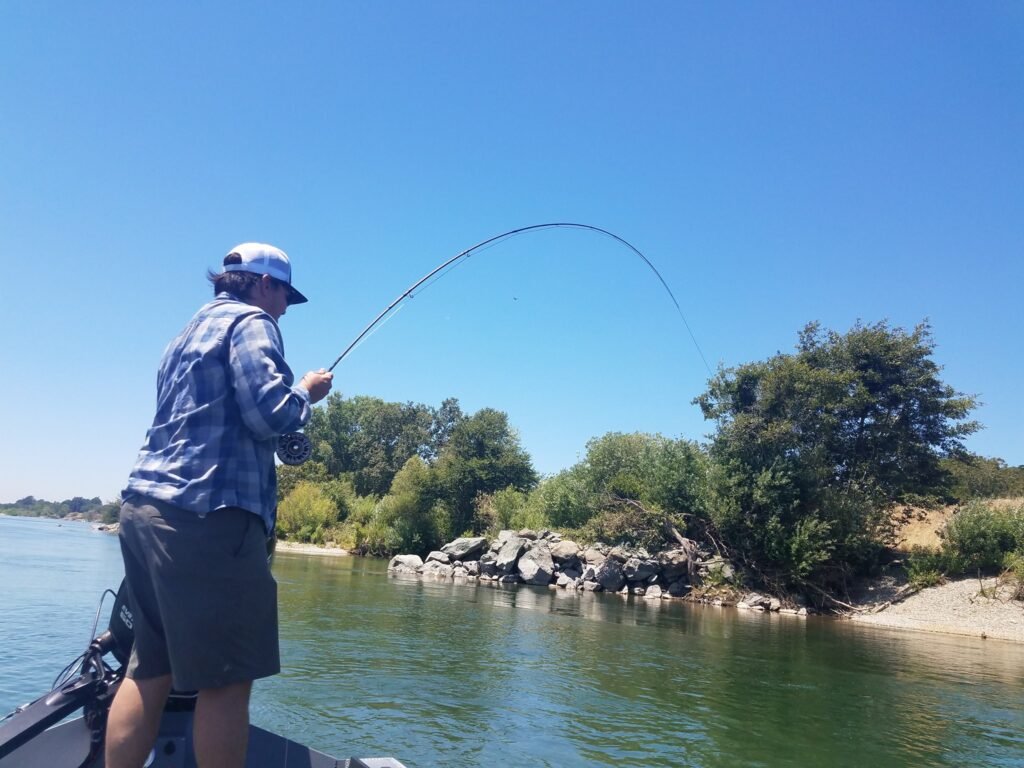
Late Winter on into Early Spring is a time of transition for the wild rainbow trout and steelhead that swim in the many rivers and streams coursing through the Central Valley. Longer days and warm temperatures bring a rise in bug and fish activity, but hatches this time of year can be shotty and sporadic making the opportunity for an angler to target rising fish with a dry fly very hit and miss. On the positive side, rainbows and steelhead that spawn in the late winter or early spring will be fresh from the spawn, hungry and feeding opportunistically. In addition, many of the rivers and streams in the area host healthy populations of large stoneflies that begin to crawl from their homes in the river cobble to bushes and grasses along the river bank where they hatch and dry their wings in preparation for their mating activity. This includes the infamous Skwala Stonefly, a yellowish olive stonefly that the Yuba River rainbows really chow down on. While the Skwala is a stonefly seen around the world on many rivers, creeks and streams, its our lovely Yuba River that has the biggest Skwalas, biggest hatch and longest hatch in the world. Lasting from late Dec on into mid/late March. There have been days where we could fish skwalas dries all day long and when that happens it is a true treat. You better go play the lotto. During the entire process hungry rainbows and steelhead are looking for these bugs and will feed on them readily at any opportunity. Large insects, sporadic hatches and opportunistic fish make the Late Winter to Early Spring a perfect time to break out your favorite type of dry fly to tie and fish those large attractors! -Captain Brian-The Spey Mechanic
INDICATOR WOES
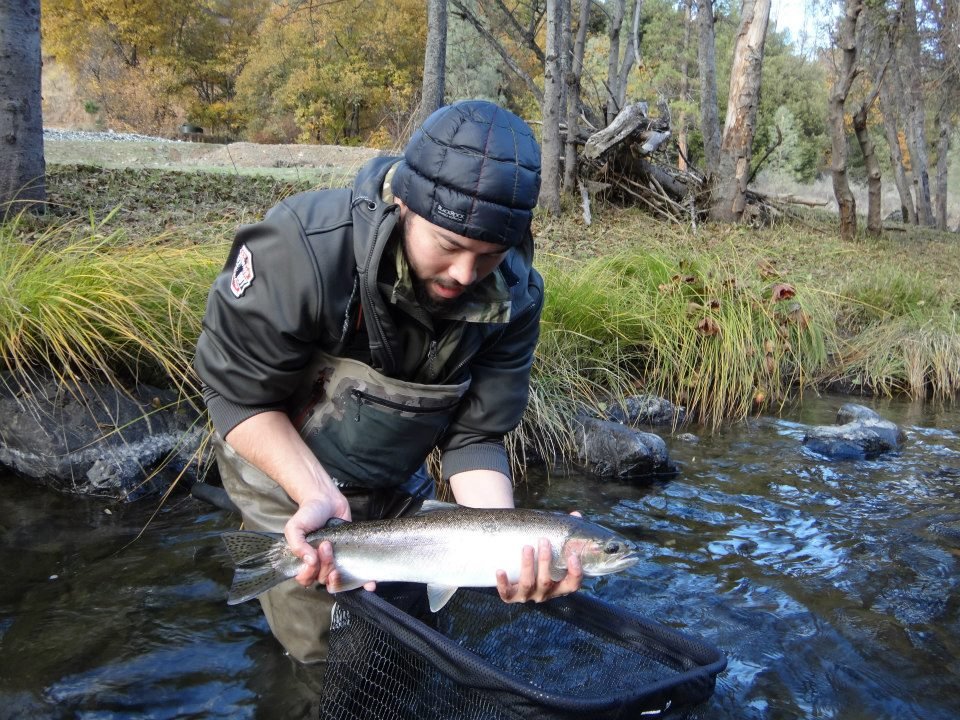
There comes a time every year when we exchange our beautiful dry flies for gaudy chunks of foam and yarn. There are certainly opportunities to fish with dry flies throughout the winter season, but to consistently hook fish when the thermometer drops it is sometimes necessary to make the switch over to what some consider to be the dark side of fly fishing. Indicator fishing may have its stigmas, but it is a surefire way to improve your catch rate and a great way to learn where fish hold and feed when they are not actively eating on the surface where you can see them. Indicator fishing is pretty easy, but there are some common mistakes that keep many fishermen from unlocking the real potential of the technique. Knowing how to avoid these critical errors will accelerate your learning curve and help you catch more subsurface feeders! The Dead Drift: The dead drift is your key to success in most nymph fishing situations, but it is overlooked by many fishermen learning to nymph with an indicator. The basic idea is that the indicator acts as a floating hinge point between your leader and fly line above the surface, and the remainder of the leader with your flies attached below the surface. The hinge setup enables your rig to sink at an angle close to ninety degrees, more easily penetrating the current to reach fish holding deeper in the water column. When used properly your indicator setup allows you to drift a fly or team of flies beneath the surface at the same speed as natural insects that would be swept along the bottom into the waiting mouths of hungry fish, but it takes some practice. The one thing to avoid when trying to get a dead drift is drag. Drag is the enemy of the dead drift and can be caused by several different variables. If you do not allow significant slack during your presentation by either mending or feeding line into the drift you may have too much tension on your line. A line with no slack will be swept by the main current and cause your flies to swing up off of the bottom, speeding unnaturally away from the fish. To prevent this from happening you must pay attention to how the indicator moves in the current. If it is dragging, a “V” shaped wake will form around it, and you know to add some slack in the form of a mend. Look closely at which direction the drag “V” is coming from. If the “V” is pointing upstream, the drag is coming from upstream and performing a downstream mend should set things right. If the “V” points downstream your line is probably dragging in the heavy current and pulling the indicator down with it. This situation can occur if you are trying to fish over or across heavy current to softer water on the other side. It can easily be corrected by mending some slack line upstream. Many beginning indicator fishermen assume that if their indicator is floating at the same speed as the surface current, they are getting a perfect dead drift, but this is not always the case. The current in a river is faster on the surface than it is on the bottom. Because of the rough, rocky texture of most river bottoms, drag causes the current to be slowed to almost a halt in some cases when above the river can be rushing by at full speed. In this situation your indicator might be floating at the same speed as the current, but your flies below will be ripping by the fish at Mach speed! This is why it is important to cast well upstream of your intended target to give your flies some time to sink. As they are sinking you can make what I like to call an indicator mend. This is basically an exaggerated mend that flicks not only your slack line, but your indicator upstream. Depending on the speed of the current you can move your indicator anywhere from a few inches to a couple of feet upstream of where your flies entered the water. This way the flies will have time to sink and get a “head start” on the indicator so it is not dragging them unnaturally. The Strike: Another common mistake people make when learning to use a strike indicator is not detecting the strike! Strikes are often much more subtle than you might imagine, and if you are waiting for your indicator to jerk a foot under the water like when you used to fish for bluegill on grandpa’s farm pond you are missing a lot of fish! A fish can inhale your fly, decide it is fake and reject it all in a split second, and even the most seasoned angler might not even know he or she had a strike. This is why it is very important to focus on the movement of the indicator and set the hook at the slightest bump or unnatural movement. Sometimes your line will rip away and you will know for sure it is a fish, but other times your indicator will simply twitch, twist, move to one side or drag funny in the current and these are all signs of a subtle strike. You may come up with nothing, but hook sets are free and the biggest fish are often the most subtle takers! As a side note, make sure you choose an indicator to fit the size of water and current speed you are fishing. Many yarn indicators you buy from the shop are overdressed right out of the package and need to be trimmed smaller before they will be useful. The indicator should just be able to support the amount of weigh you are fishing with and no more. This way it is sure to move at the slightest bump or tug. If it is overdressed not only can it spook the fish but you have a good
Nymphing 101
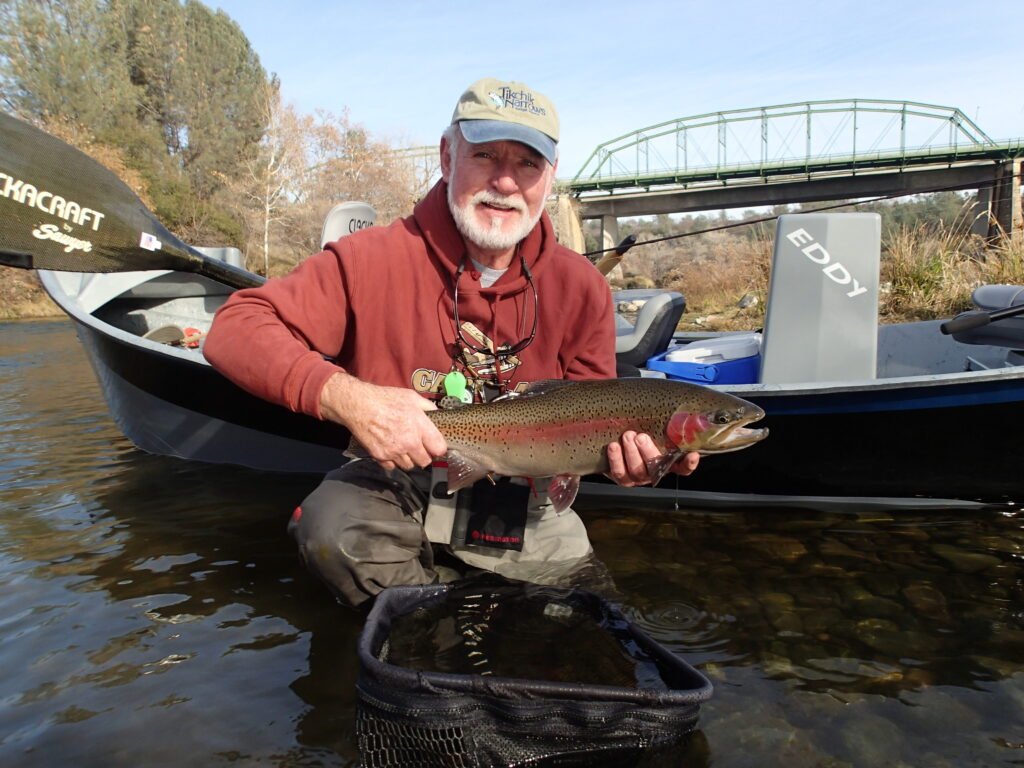
When nymph fishing with more than one fly and/or split shot the flies and tippet can have a tendency to tangle. Learning to untangle your rig quickly is unpleasant but it is often one of the first lessons we learn as fly fishers. If you are anything like me then you probably think that untangling knots is a drag, and you’d probably rather be spending your time catching fish right? Well for all of you out there who are sick of picking at bird’s nests all day here are a few tips that should help to reduce the number of tangles you get during the course of a day’s fishing. 1) Check your castThe number one cause of knotty leaders is bad casting. Nymphing often requires the use of split shot, multiple flies and fine tippet which make for a rig that is awkward to cast in the typical over the shoulder fashion. Most experienced nymph fishermen rely heavily on roll casts, water hauls and short lobs to get the flies where they need to be. When casting, focus on keeping tension between the rod and the end of your line and try to be smooth. If you need to use a standard over the shoulder presentation, try to throw a wide loop and concentrate on the pause in your back cast to keep the leader and flies in line. Mastering the basic casting skills needed for fly fishing is your surest bet to eliminating tangles and catching more fish. 2) Balance your weightEspecially with multiple fly rigs it is crucial that you balance the weight you are using along the leader. This may sound complicated but it is really pretty straightforward. A standard nymphing rig usually consists of a 9′ tapered leader with indicator attached to the butt section, a section of tippet with a split shot or two crimped on if needed, the first fly or “point” fly, another section of tippet and a second “dropper” fly. If weight such as split shot is added it should always be above the point fly on your leader. The point fly should be the heaviest fly with a smaller, lighter fly trailing behind it for the dropper. Set up like this, the rig will be balanced in-line and less likely to foul when you are casting. One thing to keep in mind is that adding extra weight like split shot to your leader will create a hinge point that can foul you up while casting. Sometimes it is a good idea to eliminate the shot all together and use heavier flies. 3) Wings getting you down? If you are using removable split shot for extra weight beware when fishing with tippet lighter than 4x. The little “wings” on the back of the split shot which make it removable also make it into a propeller that spins in the air while you are casting and spins haphazardly in the current which leads to gnarly tangles in your tippet. When you are using light tippet try non-removable shot or a heavy point fly to get down to the fish. Here’s a little “PRO” tip that I have been using for close 20yrs now. Where you traditionally put your shot there will be a knot, this knot is caused from typing in the tippet coming down from your tapered leader and the other piece going to your first fly or “point” fly. At this connection tie in a micro swivel. The tippet coming down from the tapered leader will tie in on one end and of course the other end going to your first fly. Boom, this will help keep twisting down as well. One more “PRO” tip. The knot going at the top part of the swivel where you will put your shot, don’t clip that tag from the knot. Fold that up towards your tapered leader and now crimp your shot on the tag end and main tippet material. The most important tip I can give is PRACTICE! It is hard to imagine a world without tangles, but if you get out there and practice you will be on the road to a world with fewer tangles, which incidentally seems to be the one with all the fish! -Captain Brian-The Spey Mechanic