
When nymph fishing with more than one fly and/or split shot the flies and tippet can have a tendency to tangle. Learning to untangle your rig quickly is unpleasant but it is often one of the first lessons we learn as fly fishers. If you are anything like me then you probably think that untangling knots is a drag, and you’d probably rather be spending your time catching fish right? Well for all of you out there who are sick of picking at bird’s nests all day here are a few tips that should help to reduce the number of tangles you get during the course of a day’s fishing.
1) Check your cast
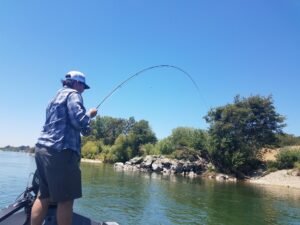
The number one cause of knotty leaders is bad casting. Nymphing often requires the use of split shot, multiple flies and fine tippet which make for a rig that is awkward to cast in the typical over the shoulder fashion. Most experienced nymph fishermen rely heavily on roll casts, water hauls and short lobs to get the flies where they need to be. When casting, focus on keeping tension between the rod and the end of your line and try to be smooth. If you need to use a standard over the shoulder presentation, try to throw a wide loop and concentrate on the pause in your back cast to keep the leader and flies in line. Mastering the basic casting skills needed for fly fishing is your surest bet to eliminating tangles and catching more fish.
2) Balance your weight
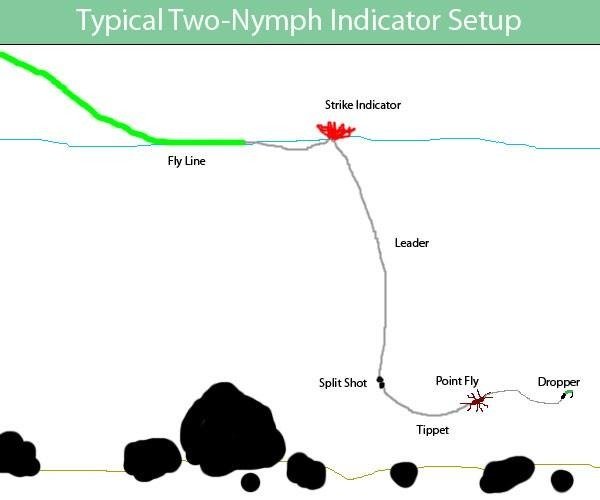
Especially with multiple fly rigs it is crucial that you balance the weight you are using along the leader. This may sound complicated but it is really pretty straightforward. A standard nymphing rig usually consists of a 9′ tapered leader with indicator attached to the butt section, a section of tippet with a split shot or two crimped on if needed, the first fly or “point” fly, another section of tippet and a second “dropper” fly. If weight such as split shot is added it should always be above the point fly on your leader. The point fly should be the heaviest fly with a smaller, lighter fly trailing behind it for the dropper. Set up like this, the rig will be balanced in-line and less likely to foul when you are casting. One thing to keep in mind is that adding extra weight like split shot to your leader will create a hinge point that can foul you up while casting. Sometimes it is a good idea to eliminate the shot all together and use heavier flies.
3) Wings getting you down?
If you are using removable split shot for extra weight beware when fishing with tippet lighter than 4x. The little “wings” on the back of the split shot which make it removable also make it into a propeller that spins in the air while you are casting and spins haphazardly in the current which leads to gnarly tangles in your tippet. When you are using light tippet try non-removable shot or a heavy point fly to get down to the fish. Here’s a little “PRO” tip that I have been using for close 20yrs now. Where you traditionally put your shot there will be a knot, this knot is caused from typing in the tippet coming down from your tapered leader and the other piece going to your first fly or “point” fly. At this connection tie in a micro swivel. The tippet coming down from the tapered leader will tie in on one end and of course the other end going to your first fly. Boom, this will help keep twisting down as well. One more “PRO” tip. The knot going at the top part of the swivel where you will put your shot, don’t clip that tag from the knot. Fold that up towards your tapered leader and now crimp your shot on the tag end and main tippet material.
The most important tip I can give is PRACTICE! It is hard to imagine a world without tangles, but if you get out there and practice you will be on the road to a world with fewer tangles, which incidentally seems to be the one with all the fish!
-Captain Brian-
The Spey Mechanic